
Surah 2, known as Al-Baqarah (“The Cow”), is the longest surah of the Qur’an.
It constitutes a foundational text for the religious, legal, and communal organization of believers.
Revealed predominantly in Medina, it develops major themes such as faith, Law, covenant, prayer, fasting, and the relationship with Jewish and Christian traditions.
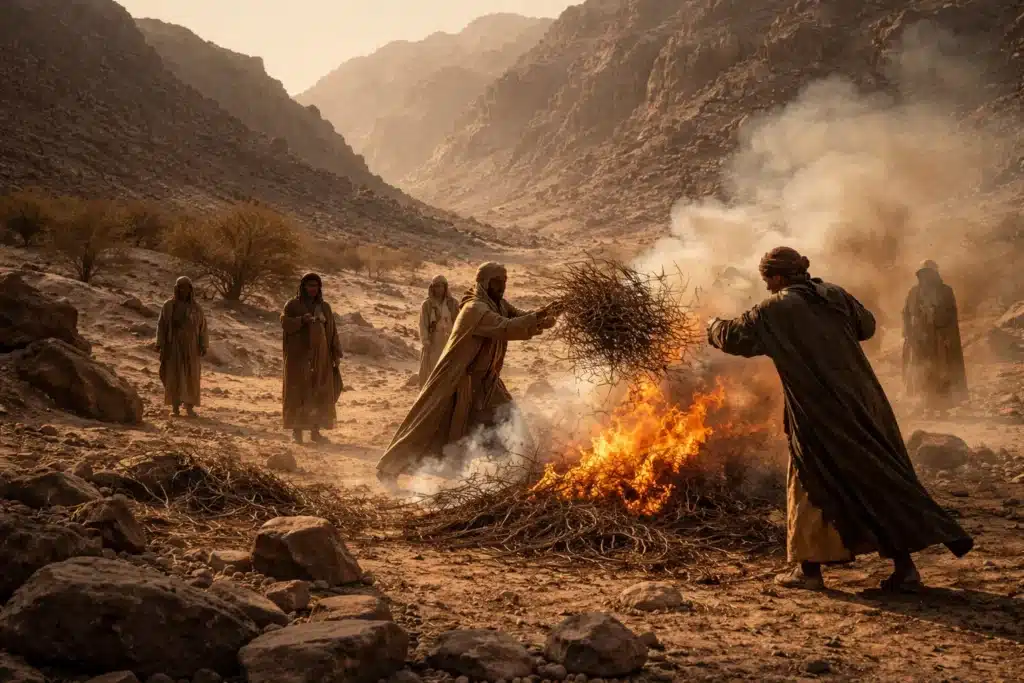
These two verses form a brief and striking scene. A group is confronted — those whom the previous verses have portrayed as hypocrites — and they are asked to stop spreading corruption. Their answer comes confidently: “we are only setting things right.” The Qur’an then delivers its judgment without hesitation: no, they themselves are the ones spreading corruption.
The two key words stand in direct opposition. fasād refers to corruption, ruin, everything that disfigures an order willed by Allah. Its opposite is iṣlāḥ: reform, rectification, restoration. The paradox therefore lies at the heart of the passage: those who claim to practice iṣlāḥ are in fact producing fasād. The expression fasād fī l-arḍ — “corruption on the earth” — appears here for the first time in the surah. It will later become one of the major themes of the Qur’an: the disorder produced when the order established by Allah is destroyed.
The divine response completely overturns their claim. The Arabic sentence strongly emphasizes this: “it is they — they precisely — who are the corrupters.” The structure is emphatic: alā (attention), innahum (truly they), hum (they themselves). The text therefore turns their own words against them. The verse then adds a sober and decisive clarification: “they do not realize it.” The problem is therefore not only moral: their perception of themselves is distorted. They create disorder while believing themselves to be agents of order.
fasād, disorder or corruption, frequently appears in the Qur’an as one of the gravest faults. In Surah 7, the prophets address their peoples: “Do not spread corruption on the earth after it has been set in order” (S. 7:56). Disorder is therefore opposed to a primordial order that was willed and established. Later, Pharaoh himself is described as one who “spreads corruption on the earth” (S. 28:4): the vocabulary of fasād thus becomes explicitly political.
The figure of the hypocrite (munāfiq), introduced already in the previous verses (S. 2:8–10), is that of a divided person: believing in appearance, corrupting in action. Surah 63 returns to this portrait: the hypocrites speak well, but their hearts are closed (S. 63:4). These verses add a new dimension: the hypocrite no longer even knows that he is a hypocrite.
The theme of inner blindness also appears in verse 7 of this same surah 2, where God “seals the hearts” of those who refuse to see. Later in the surah, some are described as having altered the Scripture (S. 2:75) or hidden the truth (S. 2:146). Already in verses 11–12, the reader is therefore prepared for a central idea: not everyone who claims to defend the truth actually serves it.
These verses raise a concrete question: if someone can spread corruption while sincerely believing himself to be serving the good, how can the true reformer be distinguished from the corrupter who is unaware of himself? The Qur’an affirms that Allah sees the difference. For human beings, however, the question remains: how can one recognize one’s own blindness?
The word iṣlāḥ is not neutral. In the religious and political vocabulary of the ancient Near East, it designates the act of restoring a just order — a language of legitimacy. Yet Surah 2 will precisely present the Qur’anic revelation as the true restoration of Abraham’s faith, in contrast with traditions considered to have been distorted. The question therefore emerges already in these verses: who is the true reformer? And how can he be recognized?
The Christian tradition is well acquainted with this figure of a man blind to his own condition. Yet a difference appears in the answer that is offered. The Qur’anic text identifies the blindness from the outside: Allah sees, Allah judges, Allah names. In the Christian perspective, the answer to this blindness involves something more: not only a gaze that identifies the problem, but a presence capable of transforming. The contrast between the two approaches becomes visible here.
The rhetorical reversal found in these verses is not new. The prophets of Israel often denounce leaders who present themselves as reformers. Ezekiel addresses shepherds who claim to guide the flock but in reality scatter it1. Jeremiah denounces those who cry “peace, peace” when there is no peace2. The mechanism is the same: the language of good can conceal destructive action.
In the broader prophetic literature we encounter a theme close to what the Qur’an calls iṣlāḥ: the return of the people to the original covenant. Biblical prophets do not present a new revelation correcting previous ones. They call the people back to what God has already given. It is a reminder, not a replacement. Here an important difference appears with the logic that begins to emerge in Surah 2.
Jesus, in the Gospels, also takes up the critique of unconscious blindness: “If you were blind, you would have no sin; but now that you say, ‘We see,’ your sin remains”3. The similarity with these Qur’anic verses is striking. Yet the continuation of the Gospel text is radically different: Jesus does not merely identify the blind man — he restores his sight.
These verses belong to the Medinan period of Muhammad’s preaching. After the Hijra to Medina, the emerging Muslim community encountered ambiguous actors: people who presented themselves as allies but whose actions contradicted their words. The passage therefore responds to a concrete situation, political as much as religious.
Classical commentators such as al-Ṭabarī and Ibn Kathīr identify these hypocrites either with hesitant leaders among the Medinan tribes or with certain members of local Jewish communities negotiating their position. The precise identification remains debated. What is certain is that the verse arises from a context of real tensions between groups.
These verses also occupy a structural place within the surah. Surah 2 opens with three successive portraits: the sincere believers (v. 1–5), the hardened unbelievers (v. 6–7), and then the hypocrites (v. 8–20). Verses 11–12 mark the moment when this third portrait becomes clearer: the hypocrite is not merely double — he is blind to himself. This is the deepest degree of inner disorder.
These two verses reveal one of the deepest problems of the human condition: a person can do evil while believing he is serving the good. This is not a trivial observation. It touches the very root of what Christians call sin: not only a fault committed, but an interior life that has lost its orientation and can no longer see itself clearly.
The Qur’an offers here a severe and lucid diagnosis. Allah sees, judges, and names. Yet the divine word reveals blindness from the outside — it identifies it without necessarily healing it. In the Christian perspective, the response to this blindness comes not only from a gaze that names the problem, but from a presence that transforms. Christ does not simply tell the blind man that he cannot see — he restores his sight. What the Bible calls metanoia — conversion, the turning of the heart — is precisely this inner movement made possible by grace, not merely by the awareness of one’s own blindness.
If self-blindness is so deep that one cannot perceive it alone, a question therefore arises: is a word from above sufficient to reach it — or is a presence capable of entering the heart and changing it necessary?
These two verses form a brief and striking scene. A group is confronted — those whom the previous verses have portrayed as hypocrites — and they are asked to stop spreading corruption. Their answer comes confidently: “we are only setting things right.” The Qur’an then delivers its judgment without hesitation: no, they themselves are the ones spreading corruption.
The two key words stand in direct opposition. fasād refers to corruption, ruin, everything that disfigures an order willed by Allah. Its opposite is iṣlāḥ: reform, rectification, restoration. The paradox therefore lies at the heart of the passage: those who claim to practice iṣlāḥ are in fact producing fasād. The expression fasād fī l-arḍ — “corruption on the earth” — appears here for the first time in the surah. It will later become one of the major themes of the Qur’an: the disorder produced when the order established by Allah is destroyed.
The divine response completely overturns their claim. The Arabic sentence strongly emphasizes this: “it is they — they precisely — who are the corrupters.” The structure is emphatic: alā (attention), innahum (truly they), hum (they themselves). The text therefore turns their own words against them. The verse then adds a sober and decisive clarification: “they do not realize it.” The problem is therefore not only moral: their perception of themselves is distorted. They create disorder while believing themselves to be agents of order.
fasād, disorder or corruption, frequently appears in the Qur’an as one of the gravest faults. In Surah 7, the prophets address their peoples: “Do not spread corruption on the earth after it has been set in order” (S. 7:56). Disorder is therefore opposed to a primordial order that was willed and established. Later, Pharaoh himself is described as one who “spreads corruption on the earth” (S. 28:4): the vocabulary of fasād thus becomes explicitly political.
The figure of the hypocrite (munāfiq), introduced already in the previous verses (S. 2:8–10), is that of a divided person: believing in appearance, corrupting in action. Surah 63 returns to this portrait: the hypocrites speak well, but their hearts are closed (S. 63:4). These verses add a new dimension: the hypocrite no longer even knows that he is a hypocrite.
The theme of inner blindness also appears in verse 7 of this same surah 2, where God “seals the hearts” of those who refuse to see. Later in the surah, some are described as having altered the Scripture (S. 2:75) or hidden the truth (S. 2:146). Already in verses 11–12, the reader is therefore prepared for a central idea: not everyone who claims to defend the truth actually serves it.
These verses raise a concrete question: if someone can spread corruption while sincerely believing himself to be serving the good, how can the true reformer be distinguished from the corrupter who is unaware of himself? The Qur’an affirms that Allah sees the difference. For human beings, however, the question remains: how can one recognize one’s own blindness?
The word iṣlāḥ is not neutral. In the religious and political vocabulary of the ancient Near East, it designates the act of restoring a just order — a language of legitimacy. Yet Surah 2 will precisely present the Qur’anic revelation as the true restoration of Abraham’s faith, in contrast with traditions considered to have been distorted. The question therefore emerges already in these verses: who is the true reformer? And how can he be recognized?
The Christian tradition is well acquainted with this figure of a man blind to his own condition. Yet a difference appears in the answer that is offered. The Qur’anic text identifies the blindness from the outside: Allah sees, Allah judges, Allah names. In the Christian perspective, the answer to this blindness involves something more: not only a gaze that identifies the problem, but a presence capable of transforming. The contrast between the two approaches becomes visible here.
The rhetorical reversal found in these verses is not new. The prophets of Israel often denounce leaders who present themselves as reformers. Ezekiel addresses shepherds who claim to guide the flock but in reality scatter it1. Jeremiah denounces those who cry “peace, peace” when there is no peace2. The mechanism is the same: the language of good can conceal destructive action.
In the broader prophetic literature we encounter a theme close to what the Qur’an calls iṣlāḥ: the return of the people to the original covenant. Biblical prophets do not present a new revelation correcting previous ones. They call the people back to what God has already given. It is a reminder, not a replacement. Here an important difference appears with the logic that begins to emerge in Surah 2.
Jesus, in the Gospels, also takes up the critique of unconscious blindness: “If you were blind, you would have no sin; but now that you say, ‘We see,’ your sin remains”3. The similarity with these Qur’anic verses is striking. Yet the continuation of the Gospel text is radically different: Jesus does not merely identify the blind man — he restores his sight.
These verses belong to the Medinan period of Muhammad’s preaching. After the Hijra to Medina, the emerging Muslim community encountered ambiguous actors: people who presented themselves as allies but whose actions contradicted their words. The passage therefore responds to a concrete situation, political as much as religious.
Classical commentators such as al-Ṭabarī and Ibn Kathīr identify these hypocrites either with hesitant leaders among the Medinan tribes or with certain members of local Jewish communities negotiating their position. The precise identification remains debated. What is certain is that the verse arises from a context of real tensions between groups.
These verses also occupy a structural place within the surah. Surah 2 opens with three successive portraits: the sincere believers (v. 1–5), the hardened unbelievers (v. 6–7), and then the hypocrites (v. 8–20). Verses 11–12 mark the moment when this third portrait becomes clearer: the hypocrite is not merely double — he is blind to himself. This is the deepest degree of inner disorder.
These two verses reveal one of the deepest problems of the human condition: a person can do evil while believing he is serving the good. This is not a trivial observation. It touches the very root of what Christians call sin: not only a fault committed, but an interior life that has lost its orientation and can no longer see itself clearly.
The Qur’an offers here a severe and lucid diagnosis. Allah sees, judges, and names. Yet the divine word reveals blindness from the outside — it identifies it without necessarily healing it. In the Christian perspective, the response to this blindness comes not only from a gaze that names the problem, but from a presence that transforms. Christ does not simply tell the blind man that he cannot see — he restores his sight. What the Bible calls metanoia — conversion, the turning of the heart — is precisely this inner movement made possible by grace, not merely by the awareness of one’s own blindness.
If self-blindness is so deep that one cannot perceive it alone, a question therefore arises: is a word from above sufficient to reach it — or is a presence capable of entering the heart and changing it necessary?
1 Ezekiel 34:2–4 : “Woe to the shepherds of Israel who feed themselves! Should not shepherds feed the sheep? […] You have not strengthened the weak, healed the sick, bound up the injured. You have not brought back the strayed or sought the lost.” — Ezekiel denounces leaders who claim to guide the people yet allow them to scatter and be lost.
2 Jeremiah 6:14 : “They have treated the wound of my people lightly, saying, ‘Peace, peace,’ when there is no peace.” — Jeremiah criticizes those who give the appearance of salvation while leaving evil untouched.
3 John 9:41 : “If you were blind, you would have no sin; but now that you say, ‘We see,’ your sin remains.” — Jesus shows that the gravest problem is not simply not seeing, but believing oneself to be lucid while remaining closed to the truth.