
Surah 2, known as Al-Baqarah (“The Cow”), is the longest surah of the Qur’an.
It constitutes a foundational text for the religious, legal, and communal organization of believers.
Revealed predominantly in Medina, it develops major themes such as faith, Law, covenant, prayer, fasting, and the relationship with Jewish and Christian traditions.
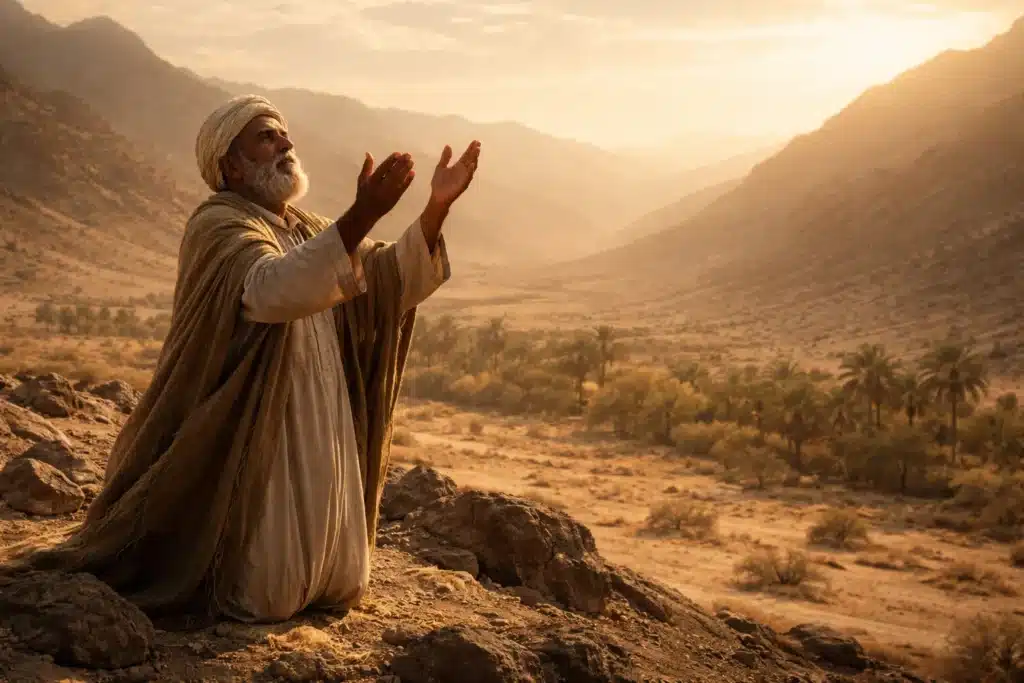
Verse 2 of this second surah opens with a strong affirmation: dhālika l-kitāb, “this is the Book.” From the very first words, the text presents itself as a certain revelation. The Qur’an does not appear here as a simple religious discourse, but as the Book. It is given as a hudan, a guidance intended for the muttaqīn, those who live in the fear of Allah.
The formula lā rayba fīhi, “no doubt in it,” reinforces this certainty. The word rayb does not refer only to intellectual doubt; it also evokes anxiety, suspicion, and inner instability. The Book is presented as a word that leaves no room for such wavering. As for the muttaqīn, the term comes from the root w-q-y, which means to protect oneself or guard against evil. It refers to those who live in an inner vigilance before Allah.
Verse 3 immediately specifies who these muttaqīn are. Three traits characterize them: they believe in the unseen (al-ghayb), they establish the prayer (yuqīmūna l-ṣalāt), and they spend from what Allah has granted them (yunfiqūn). Together these three gestures form the portrait of a man oriented — toward Allah in the heart, toward Allah in the body, and toward others in his possessions.
The term al-ghayb — the unseen, the hidden — is one of the most important notions in the Qur’an. It refers to everything that escapes human senses: the angelic world, the Last Day, the decrees of Allah, and Allah himself in his absolute transcendence. The Qur’an affirms that Allah alone fully knows the ghayb (S. 6:59; S. 27:65), and that believing in what one does not see is a fundamental act of faith. This belief is not irrational; it is the posture of the human being who recognizes that reality exceeds what his eyes can grasp.
The ṣalāt — the ritual prayer performed five times a day — is one of the pillars of Islam. The verb used here, yuqīmūna, does not simply mean “to perform prayer” but “to establish it,” “to keep it standing.” The image is strong: prayer is not a fleeting moment; it is a column that the believer maintains. The same formula appears elsewhere in the Qur’an (S. 2:177; S. 4:103; S. 14:31).
The third trait — yunfiqūn, “they spend” — refers to what exegetes call infāq: spending in the path of Allah, which includes the obligatory almsgiving (zakāt) but also every voluntary gift. The expression mimmā razaqnāhum, “from what We have provided them,” is significant: goods are not possessed as one’s own; they are granted by Allah and must circulate (S. 2:177; S. 8:3; S. 22:35).
Faith in the ghayb, the unseen, is presented here as the first act of the believer — before prayer, before almsgiving. Believing in the unseen therefore precedes everything else. This raises a simple question: what exactly does one believe in, and how does this faith arise? The Qur’an presents this faith in the ghayb as the starting point, yet this ghayb remains, by definition, veiled. Islamic tradition specifies its content — Allah, the angels, the Judgment, Paradise — but Allah himself never becomes visible and never personally manifests himself in history. Faith is therefore a posture of trust toward what remains hidden.
A contrast then appears with the Christian revelation. For the Gospel, the Invisible took the initiative to enter visibility. “The Word became flesh”1: God does not remain in the ghayb. He comes. Christian faith does not rest only on invisible realities, but on God who has revealed himself in history. It is not the same structure of faith. The question becomes concrete: does God remain beyond, or does he come?
Another tension deserves attention. The portrait of the muttaqī (the God-fearing man) — belief, prayer, almsgiving — is admirable in its coherence. Yet within the Qur’anic framework it remains the portrait of a man defined by his actions. Faith produces works, and works attest faith2. What the New Testament will question precisely is this link: not to deny the value of actions, but to ask where the power to act comes from. Saint Paul raises the question in his own way3: if man is capable of fulfilling the Law, from where does this capacity come — and what does he do with his failures?
The triptych of verse 3 — faith, prayer, almsgiving — is not a Qur’anic invention. It runs through the entire biblical tradition of Israel. The book of Deuteronomy constantly associates faith in the one God, the observance of ritual commandments, and generosity toward the poor, the Levite and the foreigner (Dt 14:28–29; 26:12). This tripartite structure — believing, praying, giving — is thus the backbone of Jewish piety.
Faith in the unseen also has deep Hebrew roots. Abraham “believed the Lord”4 without yet seeing the reality of the promises. The author of the Letter to the Hebrews formulates this precisely: “Faith is the assurance of things hoped for, the conviction of things not seen.”5 Believing in the unseen is therefore a common act within the entire Abrahamic tradition — Islam, Judaism, and Christianity — though each shapes it differently.
The notion of taqwā — the fear of God, inner vigilance — also has equivalents in the Bible. In Hebrew, the yirʾat Adonai, the “fear of the Lord,” is presented as the beginning of wisdom (Ps 110 [111]:10). This fear is not the fear of a tyrant; it is the respect of one who knows that God is greater than himself and who directs his life accordingly. The Qur’anic muttaqī and the biblical sage share this common horizon.
These verses belong to the Medinan period: Surah 2 is traditionally considered to have been revealed after the Hijra of 622, when Muhammad and his companions were in Medina, in direct contact with organized Jewish communities. This context changes the tone of the text. It is no longer only a matter of convincing Meccan polytheists; it is about defining Islam in relation to structured monotheistic traditions that already possessed their own Scripture, their own prayer, and their own almsgiving practices.
The affirmation lā rayba fīhi — “no doubt in it” — takes on a particular dimension in this context. Jewish or Christian interlocutors could object: we already have our Scriptures; why a new Book? The implicit response of the verse is that this Book is not simply one text among others — it is THE Book, whose certainty allows no discussion.
Early Muslim commentators also reflected on the opening of the verse: dhālika l-kitāb, “that Book.” Al-Ṭabarī explains that this expression may highlight the greatness and elevation of the Book, as if it were shown from an inaccessible height. Thus from the first words the Qur’an is presented as a word that surpasses human origin.
This opening through the Book reveals something even deeper. In the Qur’anic logic, revelation is above all a word that descends: “Indeed, it is We who sent down the Reminder” (S. 15:9). The center of faith is not an event in history, but a text transmitted and recited. The Bible functions differently: it almost always begins with an action of God — “In the beginning God created”7, or a call, or a meeting. Scripture then bears witness to what God has done. And in Christianity the summit is neither a Book nor an isolated event, but a person: “It is these Scriptures that testify about me”8, says Jesus. The biblical text thus leads toward someone.
The portrait of the muttaqīn in verse 3 has been read by exegetes as a description of the ideal believing community. Al-Ṭabarī notes that the three acts mentioned — faith, prayer, almsgiving — correspond to obligations toward God (faith and prayer) and obligations toward human beings (almsgiving). This double requirement is deeply rooted in the Semitic tradition: loving God with all one’s heart and loving one’s neighbor. The Qur’an receives this heritage and gives it its own form.
These two verses define an entry into faith. Believing in the unseen, praying, giving: three simple and coherent gestures that draw the silhouette of a life oriented toward Allah. Faith is not an abstract idea — it is expressed in the body and in actions. On this point the Christian tradition fully agrees.
Yet a question arises from the very structure of the text. The ghayb — the unseen — remains veiled. Allah does not cross that veil. The believer believes in what he does not see, prays toward what remains invisible, and gives from what he has received from a hand he does not see. Faith is real, generosity is beautiful — but the relationship remains asymmetrical: the human being seeks to rise toward Allah.
The Gospel proposes another image: God who descends. No longer only a word transmitted, but a Son who comes.6 The Invisible takes a face. This is not the same logic of revelation.
The question remains open: if God is capable of everything, could he wish to be known in another way than through a Book — could he wish to be encountered?
Verse 2 of this second surah opens with a strong affirmation: dhālika l-kitāb, “this is the Book.” From the very first words, the text presents itself as a certain revelation. The Qur’an does not appear here as a simple religious discourse, but as the Book. It is given as a hudan, a guidance intended for the muttaqīn, those who live in the fear of Allah.
The formula lā rayba fīhi, “no doubt in it,” reinforces this certainty. The word rayb does not refer only to intellectual doubt; it also evokes anxiety, suspicion, and inner instability. The Book is presented as a word that leaves no room for such wavering. As for the muttaqīn, the term comes from the root w-q-y, which means to protect oneself or guard against evil. It refers to those who live in an inner vigilance before Allah.
Verse 3 immediately specifies who these muttaqīn are. Three traits characterize them: they believe in the unseen (al-ghayb), they establish the prayer (yuqīmūna l-ṣalāt), and they spend from what Allah has granted them (yunfiqūn). Together these three gestures form the portrait of a man oriented — toward Allah in the heart, toward Allah in the body, and toward others in his possessions.
The term al-ghayb — the unseen, the hidden — is one of the most important notions in the Qur’an. It refers to everything that escapes human senses: the angelic world, the Last Day, the decrees of Allah, and Allah himself in his absolute transcendence. The Qur’an affirms that Allah alone fully knows the ghayb (S. 6:59; S. 27:65), and that believing in what one does not see is a fundamental act of faith. This belief is not irrational; it is the posture of the human being who recognizes that reality exceeds what his eyes can grasp.
The ṣalāt — the ritual prayer performed five times a day — is one of the pillars of Islam. The verb used here, yuqīmūna, does not simply mean “to perform prayer” but “to establish it,” “to keep it standing.” The image is strong: prayer is not a fleeting moment; it is a column that the believer maintains. The same formula appears elsewhere in the Qur’an (S. 2:177; S. 4:103; S. 14:31).
The third trait — yunfiqūn, “they spend” — refers to what exegetes call infāq: spending in the path of Allah, which includes the obligatory almsgiving (zakāt) but also every voluntary gift. The expression mimmā razaqnāhum, “from what We have provided them,” is significant: goods are not possessed as one’s own; they are granted by Allah and must circulate (S. 2:177; S. 8:3; S. 22:35).
Faith in the ghayb, the unseen, is presented here as the first act of the believer — before prayer, before almsgiving. Believing in the unseen therefore precedes everything else. This raises a simple question: what exactly does one believe in, and how does this faith arise? The Qur’an presents this faith in the ghayb as the starting point, yet this ghayb remains, by definition, veiled. Islamic tradition specifies its content — Allah, the angels, the Judgment, Paradise — but Allah himself never becomes visible and never personally manifests himself in history. Faith is therefore a posture of trust toward what remains hidden.
A contrast then appears with the Christian revelation. For the Gospel, the Invisible took the initiative to enter visibility. “The Word became flesh”1: God does not remain in the ghayb. He comes. Christian faith does not rest only on invisible realities, but on God who has revealed himself in history. It is not the same structure of faith. The question becomes concrete: does God remain beyond, or does he come?
Another tension deserves attention. The portrait of the muttaqī (the God-fearing man) — belief, prayer, almsgiving — is admirable in its coherence. Yet within the Qur’anic framework it remains the portrait of a man defined by his actions. Faith produces works, and works attest faith2. What the New Testament will question precisely is this link: not to deny the value of actions, but to ask where the power to act comes from. Saint Paul raises the question in his own way3: if man is capable of fulfilling the Law, from where does this capacity come — and what does he do with his failures?
The triptych of verse 3 — faith, prayer, almsgiving — is not a Qur’anic invention. It runs through the entire biblical tradition of Israel. The book of Deuteronomy constantly associates faith in the one God, the observance of ritual commandments, and generosity toward the poor, the Levite and the foreigner (Dt 14:28–29; 26:12). This tripartite structure — believing, praying, giving — is thus the backbone of Jewish piety.
Faith in the unseen also has deep Hebrew roots. Abraham “believed the Lord”4 without yet seeing the reality of the promises. The author of the Letter to the Hebrews formulates this precisely: “Faith is the assurance of things hoped for, the conviction of things not seen.”5 Believing in the unseen is therefore a common act within the entire Abrahamic tradition — Islam, Judaism, and Christianity — though each shapes it differently.
The notion of taqwā — the fear of God, inner vigilance — also has equivalents in the Bible. In Hebrew, the yirʾat Adonai, the “fear of the Lord,” is presented as the beginning of wisdom (Ps 110 [111]:10). This fear is not the fear of a tyrant; it is the respect of one who knows that God is greater than himself and who directs his life accordingly. The Qur’anic muttaqī and the biblical sage share this common horizon.
These verses belong to the Medinan period: Surah 2 is traditionally considered to have been revealed after the Hijra of 622, when Muhammad and his companions were in Medina, in direct contact with organized Jewish communities. This context changes the tone of the text. It is no longer only a matter of convincing Meccan polytheists; it is about defining Islam in relation to structured monotheistic traditions that already possessed their own Scripture, their own prayer, and their own almsgiving practices.
The affirmation lā rayba fīhi — “no doubt in it” — takes on a particular dimension in this context. Jewish or Christian interlocutors could object: we already have our Scriptures; why a new Book? The implicit response of the verse is that this Book is not simply one text among others — it is THE Book, whose certainty allows no discussion.
Early Muslim commentators also reflected on the opening of the verse: dhālika l-kitāb, “that Book.” Al-Ṭabarī explains that this expression may highlight the greatness and elevation of the Book, as if it were shown from an inaccessible height. Thus from the first words the Qur’an is presented as a word that surpasses human origin.
This opening through the Book reveals something even deeper. In the Qur’anic logic, revelation is above all a word that descends: “Indeed, it is We who sent down the Reminder” (S. 15:9). The center of faith is not an event in history, but a text transmitted and recited. The Bible functions differently: it almost always begins with an action of God — “In the beginning God created”7, or a call, or a meeting. Scripture then bears witness to what God has done. And in Christianity the summit is neither a Book nor an isolated event, but a person: “It is these Scriptures that testify about me”8, says Jesus. The biblical text thus leads toward someone.
The portrait of the muttaqīn in verse 3 has been read by exegetes as a description of the ideal believing community. Al-Ṭabarī notes that the three acts mentioned — faith, prayer, almsgiving — correspond to obligations toward God (faith and prayer) and obligations toward human beings (almsgiving). This double requirement is deeply rooted in the Semitic tradition: loving God with all one’s heart and loving one’s neighbor. The Qur’an receives this heritage and gives it its own form.
These two verses define an entry into faith. Believing in the unseen, praying, giving: three simple and coherent gestures that draw the silhouette of a life oriented toward Allah. Faith is not an abstract idea — it is expressed in the body and in actions. On this point the Christian tradition fully agrees.
Yet a question arises from the very structure of the text. The ghayb — the unseen — remains veiled. Allah does not cross that veil. The believer believes in what he does not see, prays toward what remains invisible, and gives from what he has received from a hand he does not see. Faith is real, generosity is beautiful — but the relationship remains asymmetrical: the human being seeks to rise toward Allah.
The Gospel proposes another image: God who descends. No longer only a word transmitted, but a Son who comes.6 The Invisible takes a face. This is not the same logic of revelation.
The question remains open: if God is capable of everything, could he wish to be known in another way than through a Book — could he wish to be encountered?
1 John 1:14 : “And the Word became flesh and dwelt among us, and we have seen his glory, glory as of the only Son from the Father, full of grace and truth.” — The Invisible enters visibility: the heart of the Christian confession.
2 James 2:17 : “So also faith by itself, if it does not have works, is dead.” — In the New Testament works do not replace faith: they manifest its reality.
3 Romans 7:18–19 : “For I know that nothing good dwells in me, that is, in my flesh. For I have the desire to do what is right, but not the ability to carry it out.” — Paul underlines the limits of human will before the good: grace becomes necessary.
4 Genesis 15:6 : “Abram believed the Lord, and he counted it to him as righteousness.” — Abraham’s faith is the common Abrahamic model for Islam, Judaism and Christianity — each interpreting this act in its own way.
5 Hebrews 11:1 : “Now faith is the assurance of things hoped for, the conviction of things not seen.” — The biblical definition of faith which, on this point, echoes the Qur’anic faith in the ghayb.
6 John 3:16 : “For God so loved the world that he gave his only Son, that whoever believes in him should not perish but have eternal life.” — The initiative comes from God: not a law transmitted, but a Son sent.
7 Genesis 1:1 : “In the beginning God created the heavens and the earth.” — The Bible opens not with a proclamation of authority about itself, but with an action of God in history.
8 John 5:39 : “You search the Scriptures because you think that in them you have eternal life; and it is they that bear witness about me.” — Christian Scripture does not close in on itself: it leads toward a person.