
Surah 2, known as Al-Baqarah (“The Cow”), is the longest surah of the Qur’an.
It constitutes a foundational text for the religious, legal, and communal organization of believers.
Revealed predominantly in Medina, it develops major themes such as faith, Law, covenant, prayer, fasting, and the relationship with Jewish and Christian traditions.
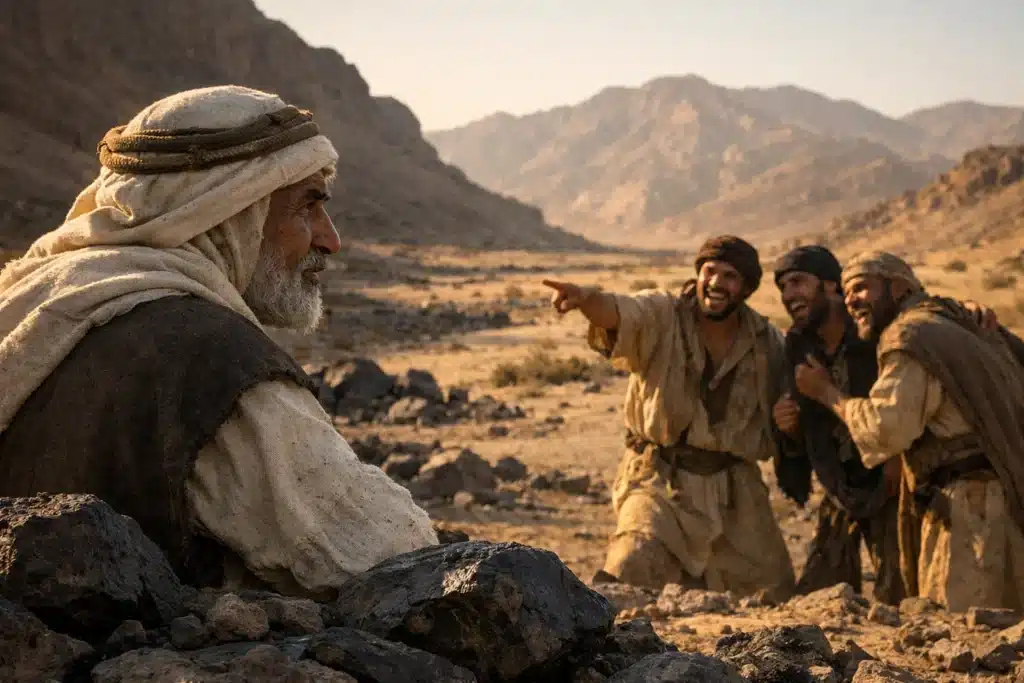
The verse presents a sharp contrast. On one side stand the sincere believers — described simply as an-nās, “people,” the ordinary mass of humanity. On the other side are figures who, when invited to believe, respond with disdain: believing would be a weakness, a lack of judgment. The word they use, sufahā', is strong. It does not merely refer to someone of little intelligence; it refers to someone who lacks moral discernment, who acts lightly, who cannot weigh what truly matters.
What is striking, however, is the very structure of their refusal. The hypocrites do not say, “we do not believe.” They say, “shall we believe like them?” Their objection is not doctrinal. It is social. To believe like the masses would be beneath them. The verse thus exposes a very ancient temptation: to consider oneself more lucid than ordinary believers.
Allah’s response does not argue. It simply reverses the judgment: the true fools are those who despise. Their ignorance of their own condition becomes the deepest part of their error.
The theme of the fool who believes himself wise runs through several surahs. In this same second surah, the one who turns away from the faith of Abraham is described as someone who has made himself foolish (S. 2:130). The idea is similar: refusing to believe is not an act of superior reason, but rather a form of blindness that the subject himself does not perceive.
Surah Al-Anfāl (The Spoils of War) emphasizes that the worst of living creatures in the sight of Allah are those who do not hear and do not understand (S. 8:22). The inability to receive faith is portrayed as a disorder of perception rather than a sign of intelligence. Contempt for faith itself becomes a form of obscuring the mind.
The Qur’an also returns to the ironic reversal found here: what unbelievers call foolishness in believers is precisely what Allah calls righteousness. This reversal of moral categories appears notably in Surah Al-Mutaffifīn (The Defrauders), where the impious laugh at the believers, and the believers laugh in return on the Day of Judgment (S. 83:29–34).
The verse portrays those who refuse to believe as fools who ignore their own condition. The statement is strong. It assumes that faith is an accessible reality, and that those who reject it do so not for lack of evidence but because of pride or inner blindness. A question therefore arises: what makes faith accessible to some and not to others? The verse describes the gap, but it does not explain it.
A tension also appears in the very structure of the reasoning. The hypocrites refuse to believe like people. Their resistance therefore seems linked to a social comparison: they do not wish to be associated with a group they probably consider inferior. Yet this refusal is not examined; it is immediately disqualified. The difficulty becomes visible: the verse closes the question precisely where it might begin to open.
From a Christian perspective, the relationship between faith and intelligence is framed differently. The apostle Paul acknowledges that “the message of the cross is foolishness to those who are perishing”1. But instead of turning the word back as an insult, he fully accepts it: the wisdom of God may appear as foolishness in the eyes of the world. The contrast between the two logics is clear. In the Qur’anic verse, the fool is the one who refuses to believe. In the Pauline perspective, faith itself accepts appearing as foolishness — and this is precisely its strength.
The word sufahā' (fools) echoes a very ancient term from Hebrew wisdom literature: nābāl. It is the word of Psalm 14:1: “The fool says in his heart: ‘There is no God.’”2 In both traditions, the fool is not primarily someone who lacks intelligence. Rather, it is someone whose moral judgment is distorted — and who, precisely, does not realize it. The structure is identical in both traditions.
This convergence is not accidental. The Qur’an stands within a very ancient biblical and sapiential heritage: the opposition between the wise person who fears God and the fool who lives as though He did not exist. This pattern was well established before Islam, and the Qur’an continues it faithfully — even reproducing the logic of eschatological reversal: those who mock will themselves be mocked on the last day.
Yet a subtle shift nonetheless occurs. In the Bible, the fool is defined by his relationship to God Himself: he is the one who denies or ignores Him in his conduct. In the Qur’an, the fool is the one who refuses to believe as the community of believers does. The center of gravity has therefore shifted: from God to adherence to the community of faith. The framework is inherited — but the emphasis is clearly displaced.
This verse addresses the emerging Medinan community. The hypocrites described by the Qur’an were real figures: inhabitants of Medina who displayed outward adherence to Islam while maintaining ties with the adversaries of the Muslim community. Their refusal to believe “like people” was therefore not a philosophical position — it was a social and political strategy.
The word sufahā' had a precise resonance in the Arab culture of the time. It referred to those who lacked self-control, who acted without discernment, who squandered or allowed themselves to be carried away. To apply it to sincere believers was to discredit them in a tribal environment where the reputation of wisdom carried great weight. The verse disarms this rhetoric by reversing it.
Classical commentators such as al-Ṭabarī identify the “people” (an-nās) of the verse with the companions of Muhammad, and the hypocrites with known figures in the Medinan community. The verse therefore also functioned as a clear boundary: on one side those who truly belong to the believing community, on the other those whose belonging is merely simulated.
This verse exposes a very human mechanism: the refusal to believe can arise not from sincere doubt but from a feeling of superiority. The hypocrites are not seeking truth — they refuse to be confused with the crowd. Their contempt says something about themselves, not about faith.
The Christian tradition is familiar with this situation. Paul himself evokes it: “Consider your calling, brothers: not many of you were wise by human standards, not many were powerful, not many were of noble birth”3. In other words, the first Christian community was largely composed of simple people. Yet the Christian response is not to reverse the insult. It goes further: God has chosen what is weak to shame the strong (1 Cor 1:27). Faith does not try to prove that it stands with the lucid — it humbly accepts appearing simple in the eyes of the world.
Perhaps this is where the deepest difference lies. The Qur’an reverses the accusation and declares the hypocrites truly foolish. Christianity follows another path: it recognizes that faith may appear as foolishness in the eyes of the world. Paul states it explicitly: “the message of the cross is foolishness to those who are perishing” (1 Cor 1:18). This paradox stands at the heart of the Christian message: what the world judges weakness or absurdity may precisely be the place where God’s wisdom is revealed. A question therefore remains open: is faith measured by the clarity of the believer, or by the reality to which it leads?
The verse presents a sharp contrast. On one side stand the sincere believers — described simply as an-nās, “people,” the ordinary mass of humanity. On the other side are figures who, when invited to believe, respond with disdain: believing would be a weakness, a lack of judgment. The word they use, sufahā', is strong. It does not merely refer to someone of little intelligence; it refers to someone who lacks moral discernment, who acts lightly, who cannot weigh what truly matters.
What is striking, however, is the very structure of their refusal. The hypocrites do not say, “we do not believe.” They say, “shall we believe like them?” Their objection is not doctrinal. It is social. To believe like the masses would be beneath them. The verse thus exposes a very ancient temptation: to consider oneself more lucid than ordinary believers.
Allah’s response does not argue. It simply reverses the judgment: the true fools are those who despise. Their ignorance of their own condition becomes the deepest part of their error.
The theme of the fool who believes himself wise runs through several surahs. In this same second surah, the one who turns away from the faith of Abraham is described as someone who has made himself foolish (S. 2:130). The idea is similar: refusing to believe is not an act of superior reason, but rather a form of blindness that the subject himself does not perceive.
Surah Al-Anfāl (The Spoils of War) emphasizes that the worst of living creatures in the sight of Allah are those who do not hear and do not understand (S. 8:22). The inability to receive faith is portrayed as a disorder of perception rather than a sign of intelligence. Contempt for faith itself becomes a form of obscuring the mind.
The Qur’an also returns to the ironic reversal found here: what unbelievers call foolishness in believers is precisely what Allah calls righteousness. This reversal of moral categories appears notably in Surah Al-Mutaffifīn (The Defrauders), where the impious laugh at the believers, and the believers laugh in return on the Day of Judgment (S. 83:29–34).
The verse portrays those who refuse to believe as fools who ignore their own condition. The statement is strong. It assumes that faith is an accessible reality, and that those who reject it do so not for lack of evidence but because of pride or inner blindness. A question therefore arises: what makes faith accessible to some and not to others? The verse describes the gap, but it does not explain it.
A tension also appears in the very structure of the reasoning. The hypocrites refuse to believe like people. Their resistance therefore seems linked to a social comparison: they do not wish to be associated with a group they probably consider inferior. Yet this refusal is not examined; it is immediately disqualified. The difficulty becomes visible: the verse closes the question precisely where it might begin to open.
From a Christian perspective, the relationship between faith and intelligence is framed differently. The apostle Paul acknowledges that “the message of the cross is foolishness to those who are perishing”1. But instead of turning the word back as an insult, he fully accepts it: the wisdom of God may appear as foolishness in the eyes of the world. The contrast between the two logics is clear. In the Qur’anic verse, the fool is the one who refuses to believe. In the Pauline perspective, faith itself accepts appearing as foolishness — and this is precisely its strength.
The word sufahā' (fools) echoes a very ancient term from Hebrew wisdom literature: nābāl. It is the word of Psalm 14:1: “The fool says in his heart: ‘There is no God.’”2 In both traditions, the fool is not primarily someone who lacks intelligence. Rather, it is someone whose moral judgment is distorted — and who, precisely, does not realize it. The structure is identical in both traditions.
This convergence is not accidental. The Qur’an stands within a very ancient biblical and sapiential heritage: the opposition between the wise person who fears God and the fool who lives as though He did not exist. This pattern was well established before Islam, and the Qur’an continues it faithfully — even reproducing the logic of eschatological reversal: those who mock will themselves be mocked on the last day.
Yet a subtle shift nonetheless occurs. In the Bible, the fool is defined by his relationship to God Himself: he is the one who denies or ignores Him in his conduct. In the Qur’an, the fool is the one who refuses to believe as the community of believers does. The center of gravity has therefore shifted: from God to adherence to the community of faith. The framework is inherited — but the emphasis is clearly displaced.
This verse addresses the emerging Medinan community. The hypocrites described by the Qur’an were real figures: inhabitants of Medina who displayed outward adherence to Islam while maintaining ties with the adversaries of the Muslim community. Their refusal to believe “like people” was therefore not a philosophical position — it was a social and political strategy.
The word sufahā' had a precise resonance in the Arab culture of the time. It referred to those who lacked self-control, who acted without discernment, who squandered or allowed themselves to be carried away. To apply it to sincere believers was to discredit them in a tribal environment where the reputation of wisdom carried great weight. The verse disarms this rhetoric by reversing it.
Classical commentators such as al-Ṭabarī identify the “people” (an-nās) of the verse with the companions of Muhammad, and the hypocrites with known figures in the Medinan community. The verse therefore also functioned as a clear boundary: on one side those who truly belong to the believing community, on the other those whose belonging is merely simulated.
This verse exposes a very human mechanism: the refusal to believe can arise not from sincere doubt but from a feeling of superiority. The hypocrites are not seeking truth — they refuse to be confused with the crowd. Their contempt says something about themselves, not about faith.
The Christian tradition is familiar with this situation. Paul himself evokes it: “Consider your calling, brothers: not many of you were wise by human standards, not many were powerful, not many were of noble birth”3. In other words, the first Christian community was largely composed of simple people. Yet the Christian response is not to reverse the insult. It goes further: God has chosen what is weak to shame the strong (1 Cor 1:27). Faith does not try to prove that it stands with the lucid — it humbly accepts appearing simple in the eyes of the world.
Perhaps this is where the deepest difference lies. The Qur’an reverses the accusation and declares the hypocrites truly foolish. Christianity follows another path: it recognizes that faith may appear as foolishness in the eyes of the world. Paul states it explicitly: “the message of the cross is foolishness to those who are perishing” (1 Cor 1:18). This paradox stands at the heart of the Christian message: what the world judges weakness or absurdity may precisely be the place where God’s wisdom is revealed. A question therefore remains open: is faith measured by the clarity of the believer, or by the reality to which it leads?
1 1 Corinthians 1:18: “For the message of the cross is foolishness to those who are perishing.” — Paul acknowledges that Christian preaching may appear absurd in the eyes of the world, yet sees in this not shame but the mark of divine wisdom.
2 Psalm 14:1: “The fool says in his heart, ‘There is no God.’” — In Hebrew, nābāl designates someone whose moral judgment is distorted, not merely someone lacking intelligence. The proximity with sufahā' is real: in both traditions the fool is first of all someone who fails to see what matters most — and who does not realize that he fails to see it.
3 1 Corinthians 1:26–27: “Consider your calling: not many were wise according to the flesh, not many powerful. But God chose what is weak in the world to shame the strong.” — Paul does not reverse the accusation of weakness against his opponents; he accepts it and sees in it the very logic of God.