
Very brief, Sūrat al-Fātiḥa (literally “The Opening”) opens the Qur’an as a prayer addressed to Allāh, composed of praise, a plea for help, and a request to be guided on the “straight path.”
Recited daily in ritual prayer, it sets the tone of Qur’anic piety: exclusive worship, dependence on Allāh, and the horizon of Judgment. It immediately raises the central question the rest of the Qur’an will develop: what is the “straight path,” and how can it be recognized?
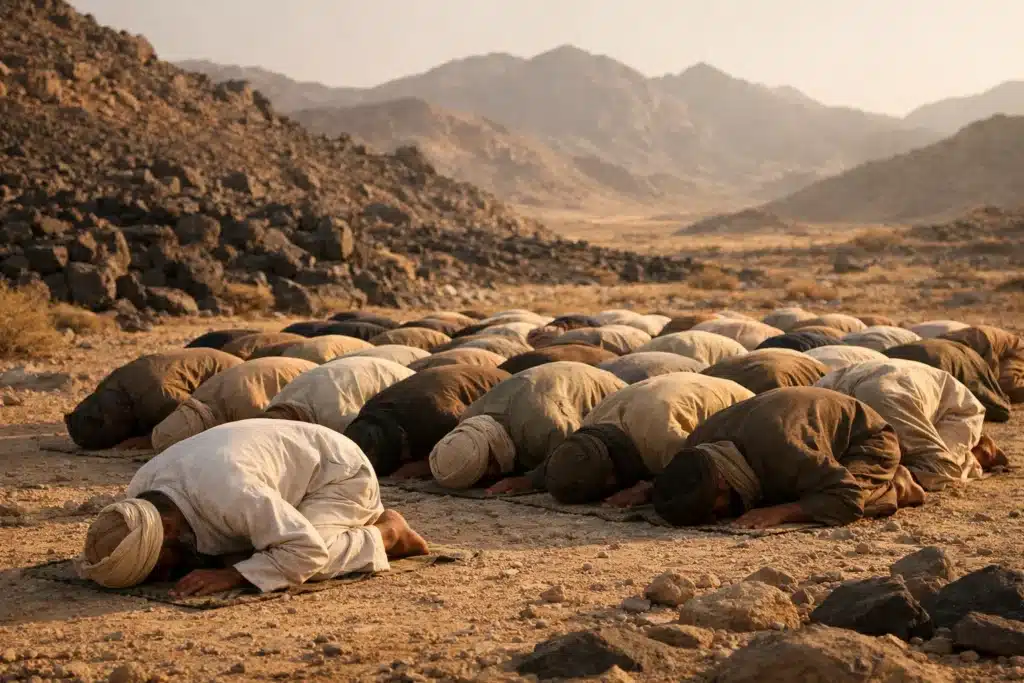
This verse marks a turning point in this opening surah. Until now, Allah was proclaimed, praised, and described. Suddenly, the prayer becomes dialogue. The one who was speaking about Allah now addresses Him directly.
The sentence is simple, yet powerfully structured. The pronoun iyyāka is placed at the beginning: “You alone.” In Arabic, this signals exclusivity. It is not merely a matter of worshipping, but of worshipping Allah alone.
Two verbs sum up the whole human condition. “To worship” is to acknowledge the sovereignty of Allah. “To ask for help” is to acknowledge one’s own weakness. The human being stands before his Lord without autonomous self-sufficiency.
Exclusive worship recurs throughout the Qur’an. Thus Allah declares: “I did not create jinn and mankind except to worship Me” (S. 51:56). Likewise, it is affirmed: “There is no deity except Me, so worship Me” (S. 21:25). And again: “I have been commanded to worship Allah, devoting the religion sincerely to Him” (S. 39:11). Worship is therefore not a secondary theme; it defines the purpose of life and the mission of the believer.
The request for help also appears repeatedly. It is said: “Seek help through patience and prayer” (S. 2:45). Elsewhere, Moses exhorts his people: “Seek help from Allah and be patient” (S. 7:128). We also read: “If Allah helps you, none can overcome you” (S. 3:160). The believer never relies first on himself. He turns to Allah in trial and uncertainty.
The “we” of the verse is significant. Prayer is not isolated. It unites all who recite these words five times a day. Dependence on Allah thus becomes a communal confession. Faith is not only inner conviction, but a repeated collective act.
The verse asserts a clear exclusivity: “It is You we worship.” The formula closes the door to any sharing of worship. Yet elsewhere, the Qur’an frames the place of the Messenger in very strong terms.
Thus, the Qur’an calls believers to believe in “Allah and His Messenger”, to “support” him and to “honor” him, while glorifying Allah morning and evening (S. 48:9). Although the text does not command worship of Muḥammad, it clearly enjoins public reverence toward him. This closeness may raise a question: where does the honor due to the Prophet end, and where does what belongs to Allah alone begin? In principle, the Qur’an maintains a clear distinction.
Other passages reinforce this practical tension. “Obeying the Messenger” is linked to obedience to Allah (S. 4:80), and believers are required to accept Muḥammad’s judgment without resistance (S. 4:65). They are even called to invoke blessings upon him, establishing a regular devotion surrounding his person (S. 33:56).
In biblical prayers, the relationship to God often unfolds in two simple movements. First, one turns to God and acknowledges Him as Lord. Then, one asks Him for the help one lacks.
The Psalms express it in very direct words: “My help comes from the Lord, who made heaven and earth”1. Dependence is not shame, but trust. Prayer becomes an act of truth about oneself.
The very form of the verse also echoes an ancient reflex: prayer in the plural. Saying “we worship” and “we ask” carries solidarity. Faith is spoken together, even when each person prays alone.
In the seventh century, proclaiming “It is You alone we worship” was not an abstract formula. Arabia lived within a multiple religious universe. Each tribe honored its deities, invoked its protectors, and multiplied mediations.
In that context, affirming exclusive worship meant breaking with an entire system. Worship could no longer be distributed according to need. One had to choose a single Lord and renounce other supports. The formula therefore carried a strong spiritual charge, but also a very concrete polemical dimension.
This radicality also sheds light on the structure of the verse. The sudden shift from praise to direct address intensifies the commitment. The one who spoke about Allah now stands before Him. The proclaimed exclusivity becomes a personal and deliberate act.
This verse raises a simple and profound question: who is the human being before God? For the Qur’an, he is a servant. His greatness consists in worship and dependence.
Christian faith begins at the same point. It worships. It implores. Yet it affirms that God wills to go further. Jesus declares to His disciples: “I no longer call you servants (…) I have called you friends”2. Worship remains, but the relationship is elevated.
The question therefore remains: does God merely seek to be worshipped, or does He desire to bring man into a more intimate relationship, that of a Father who shares His own life? In the Gospel, the answer is given: God calls man to share in His life.
This verse marks a turning point in this opening surah. Until now, Allah was proclaimed, praised, and described. Suddenly, the prayer becomes dialogue. The one who was speaking about Allah now addresses Him directly.
The sentence is simple, yet powerfully structured. The pronoun iyyāka is placed at the beginning: “You alone.” In Arabic, this signals exclusivity. It is not merely a matter of worshipping, but of worshipping Allah alone.
Two verbs sum up the whole human condition. “To worship” is to acknowledge the sovereignty of Allah. “To ask for help” is to acknowledge one’s own weakness. The human being stands before his Lord without autonomous self-sufficiency.
Exclusive worship recurs throughout the Qur’an. Thus Allah declares: “I did not create jinn and mankind except to worship Me” (S. 51:56). Likewise, it is affirmed: “There is no deity except Me, so worship Me” (S. 21:25). And again: “I have been commanded to worship Allah, devoting the religion sincerely to Him” (S. 39:11). Worship is therefore not a secondary theme; it defines the purpose of life and the mission of the believer.
The request for help also appears repeatedly. It is said: “Seek help through patience and prayer” (S. 2:45). Elsewhere, Moses exhorts his people: “Seek help from Allah and be patient” (S. 7:128). We also read: “If Allah helps you, none can overcome you” (S. 3:160). The believer never relies first on himself. He turns to Allah in trial and uncertainty.
The “we” of the verse is significant. Prayer is not isolated. It unites all who recite these words five times a day. Dependence on Allah thus becomes a communal confession. Faith is not only inner conviction, but a repeated collective act.
The verse asserts a clear exclusivity: “It is You we worship.” The formula closes the door to any sharing of worship. Yet elsewhere, the Qur’an frames the place of the Messenger in very strong terms.
Thus, the Qur’an calls believers to believe in “Allah and His Messenger”, to “support” him and to “honor” him, while glorifying Allah morning and evening (S. 48:9). Although the text does not command worship of Muḥammad, it clearly enjoins public reverence toward him. This closeness may raise a question: where does the honor due to the Prophet end, and where does what belongs to Allah alone begin? In principle, the Qur’an maintains a clear distinction.
Other passages reinforce this practical tension. “Obeying the Messenger” is linked to obedience to Allah (S. 4:80), and believers are required to accept Muḥammad’s judgment without resistance (S. 4:65). They are even called to invoke blessings upon him, establishing a regular devotion surrounding his person (S. 33:56).
In biblical prayers, the relationship to God often unfolds in two simple movements. First, one turns to God and acknowledges Him as Lord. Then, one asks Him for the help one lacks.
The Psalms express it in very direct words: “My help comes from the Lord, who made heaven and earth”1. Dependence is not shame, but trust. Prayer becomes an act of truth about oneself.
The very form of the verse also echoes an ancient reflex: prayer in the plural. Saying “we worship” and “we ask” carries solidarity. Faith is spoken together, even when each person prays alone.
In the seventh century, proclaiming “It is You alone we worship” was not an abstract formula. Arabia lived within a multiple religious universe. Each tribe honored its deities, invoked its protectors, and multiplied mediations.
In that context, affirming exclusive worship meant breaking with an entire system. Worship could no longer be distributed according to need. One had to choose a single Lord and renounce other supports. The formula therefore carried a strong spiritual charge, but also a very concrete polemical dimension.
This radicality also sheds light on the structure of the verse. The sudden shift from praise to direct address intensifies the commitment. The one who spoke about Allah now stands before Him. The proclaimed exclusivity becomes a personal and deliberate act.
This verse raises a simple and profound question: who is the human being before God? For the Qur’an, he is a servant. His greatness consists in worship and dependence.
Christian faith begins at the same point. It worships. It implores. Yet it affirms that God wills to go further. Jesus declares to His disciples: “I no longer call you servants (…) I have called you friends”2. Worship remains, but the relationship is elevated.
The question therefore remains: does God merely seek to be worshipped, or does He desire to bring man into a more intimate relationship, that of a Father who shares His own life? In the Gospel, the answer is given: God calls man to share in His life.
1 Psalm 121:2 : “My help comes from the Lord, who made heaven and earth.” — Biblical prayer expresses trusting dependence upon God.
2 John 15:15 : “I no longer call you servants (…) I have called you friends.” — Jesus reveals a new relationship between God and humanity.